EDS Version History
The EDS Pulse-demand™ System Over the Years
Since its introduction in 1992, the EDS Electronic Delivery System has evolved in size, form, and functionality. The continued operation of many legacy EDS units is a testament to their robust engineering and long service life. However, as these systems age, sourcing replacement components has become increasingly difficult—and in some cases, no longer possible.
As a result, customers may be faced with the challenging decision to retire an EDS unit that has provided years or even decades of dependable service. To help customers make informed decisions, we have created this comparative history of EDS models and their evolution over time. This overview is intended to clearly illustrate the benefits of newer systems and assist users in thoughtfully determining if—and when—replacement is the right choice.
Experience + New Technology = A Better EDS
Drawing on decades of real-world use and advances in technology, the EDS has become smaller, more durable, and easier to maintain. Over time, it adopted simpler, longer-lasting batteries, introduced a two-place model, and incorporated a more user-friendly and reliable switch. Improvements to the firmware and internal components have further enhanced overall performance and longevity.
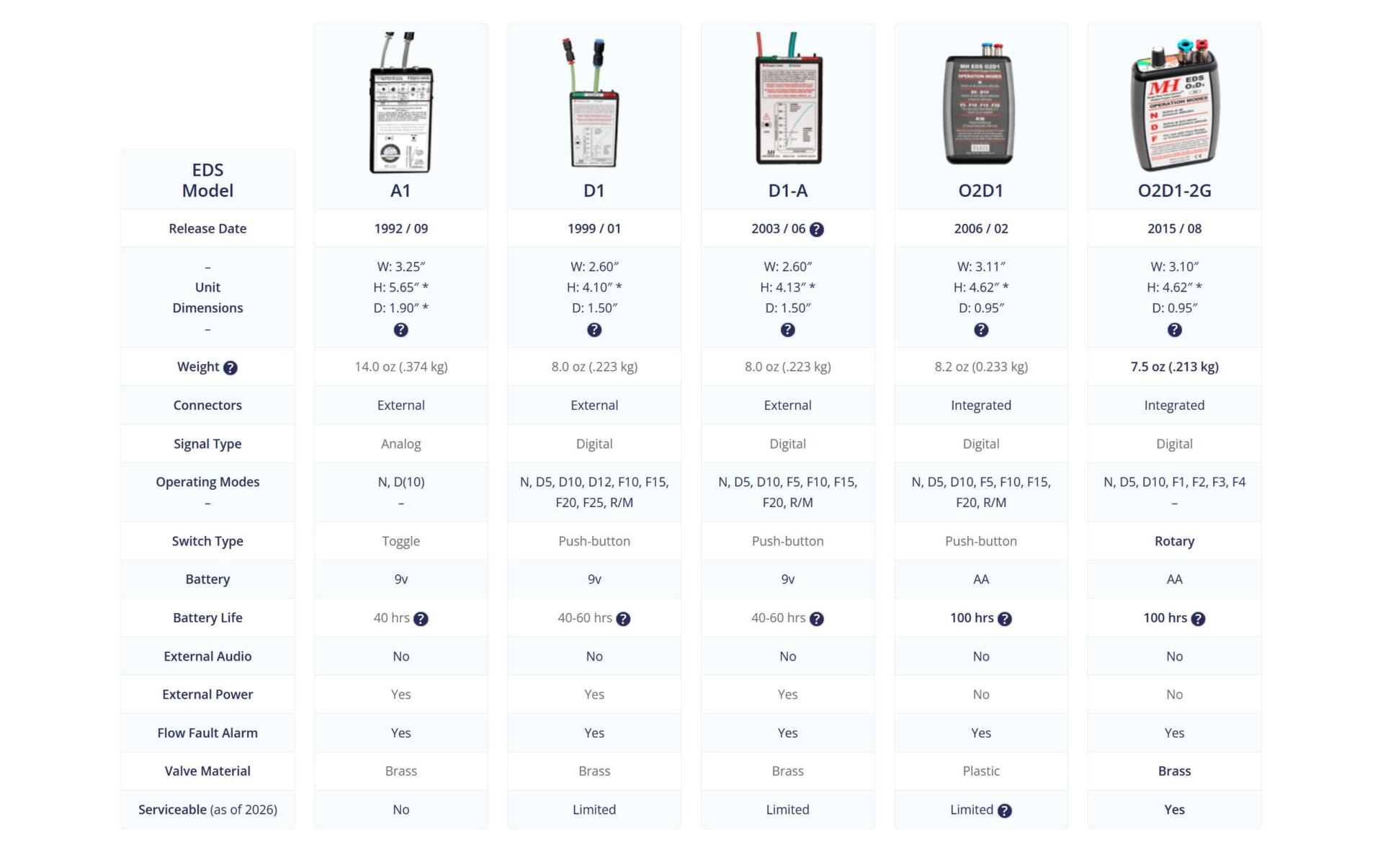
Single-place EDS Comparison Chart
Note: Table rows may not align properly on devices with a screen-width less than 1270 pixels. Tablet and mobile users may wish to view a static image of the table here: Single-place EDS Comparison Chart
- EDS
Model - Release Date
- –
Unit
Dimensions
– - Weight Weight with batteries.
- Connectors
- Signal Type
- Operating Modes
– - Switch Type
- Battery
- Battery Life
- External Audio
- External Power
- Flow Fault Alarm
- Valve Material
- Serviceable (as of 2026)
A1- 1992 / 09
- W: 3.25″
H: 5.65″ *
D: 1.90″ *
W: 3.25 in. (82.55mm)
H: 5.65 in (+ 2.5 in. connectors)
D: 1.9 in. (with switch protector and 3M® Dual Lock) - 14.0 oz (.374 kg)
- External
- Analog
- N, D(10)
– - Toggle
- 9v
- 40 hrs Using Duracell® or Energizer® alkaline batteries at 77°F (25°C) under normal operating conditions.
- No
- Yes
- Yes
- Brass
- No
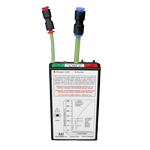
D1- 1999 / 01
- W: 2.60″
H: 4.10″ *
D: 1.50″
W: 2.6 in. (6.6 cm.)
H: 4.1 in. +2.5 in. connectors (10.41cm + 5.46 cm.)
D: 1.5 in. (3.81 cm.) - 8.0 oz (.223 kg)
- External
- Digital
- N, D5, D10, D12, F10, F15, F20, F25, R/M
- Push-button
- 9v
- 40-60 hrs Using Duracell® or Energizer® alkaline batteries at 77°F (25°C) under normal operating conditions.
- No
- Yes
- Yes
- Brass
- Limited
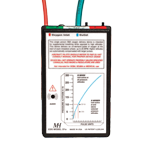
D1-A- 2003 / 06 Although the EDS D1-A was introduced in 2003, EDS D1 units continued to be produced and sold until 2006. Check the front label of your unit to confirm model type.
- W: 2.60″
H: 4.13″ *
D: 1.50″
W: 2.6 in. (6.6 cm.)
H: 4.13 in. +2.5 in. connectors (10.5cm + 5.46 cm.)
D: 1.5 in. (3.81 cm.) - 8.0 oz (.223 kg)
- External
- Digital
- N, D5, D10, F5, F10, F15, F20, R/M
- Push-button
- 9v
- 40-60 hrs Using Duracell® or Energizer® alkaline batteries at 77°F (25°C) under normal operating conditions.
- No
- Yes
- Yes
- Brass
- Limited
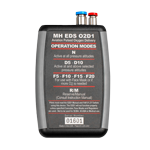
O2D1- 2006 / 02
- W: 3.11″
H: 4.62″ *
D: 0.95″
W: 3.11 in. (7.9 cm.)
H: 5.23 in. (11.7 cm.) with connectors.
D: 0.95 in. (2.415 cm.) - 8.2 oz (0.233 kg)
- Integrated
- Digital
- N, D5, D10, F5, F10, F15, F20, R/M
- Push-button
- AA
- 100 hrs Using Duracell® Ultra or Energizer® Max alkaline batteries at 77°F (25°C) under normal operating conditions.
- No
- No
- Yes
- Plastic
- Limited Irreplaceable Parts:
Push-button Switch,
Circuit Board,
Valve
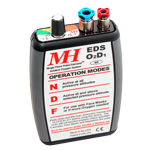
O2D1-2G- 2015 / 08
- W: 3.10″
H: 4.62″ *
D: 0.95″
W: 3.11 in. (7.9 cm.)
H: 5.23 in. (11.7 cm.) with connectors.
D: 0.95 in. (2.415 cm.) - 7.5 oz (.213 kg)
- Integrated
- Digital
- N, D5, D10, F1, F2, F3, F4
– - Rotary
- AA
- 100 hrs Using Duracell® Ultra or Energizer® Max alkaline batteries at 77°F (25°C) under normal operating conditions.
- No
- No
- Yes
- Brass
- Yes
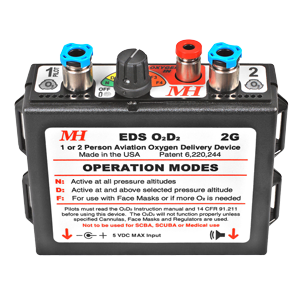
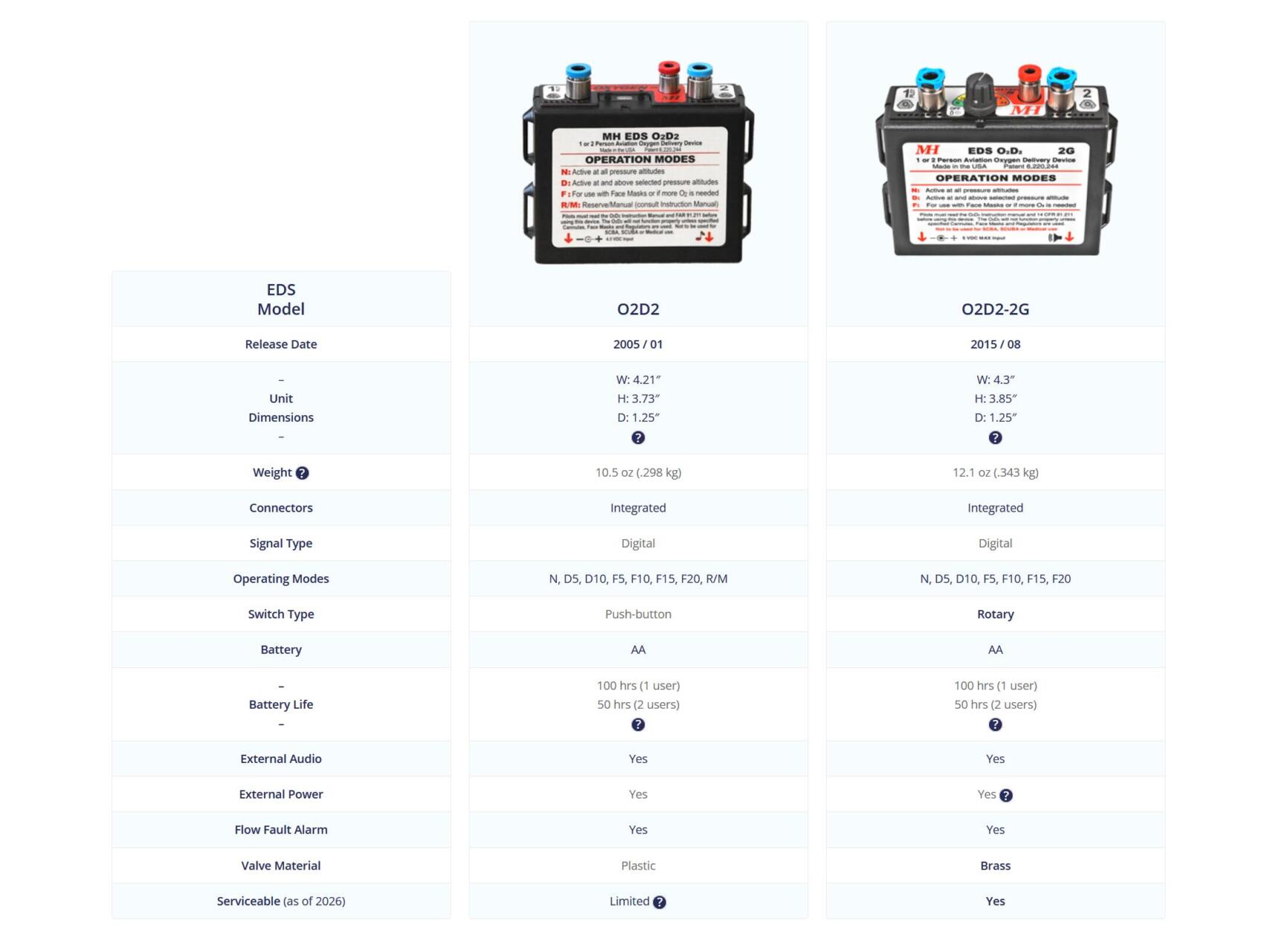
Two-place EDS Comparison Chart
Note: Table rows may not align properly on devices with a screen-width less than 1270 pixels. Tablet and mobile users may wish to view a static image of the table here: Two-place EDS Comparison Chart
- EDS
Model - Release Date
- –
Unit
Dimensions
– - Weight Weight with batteries.
- Connectors
- Signal Type
- Operating Modes
- Switch Type
- Battery
- –
Battery Life
– - External Audio
- External Power
- Flow Fault Alarm
- Valve Material
- Serviceable (as of 2026)

O2D2- 2005 / 01
- W: 4.21″
H: 3.73″
D: 1.25″
W: 4.21 in. (10.7 cm.)
H: 3.73 in. (9.475 cm.) with connectors
D: 1.25 in. (3.2 cm.) - 10.5 oz (.298 kg)
- Integrated
- Digital
- N, D5, D10, F5, F10, F15, F20, R/M
- Push-button
- AA
- 100 hrs (1 user)
50 hrs (2 users)
Using Duracell® Ultra or Energizer® Max alkaline batteries at 77°F (25°C) under normal operating conditions. - Yes
- Yes
- Yes
- Plastic
- Limited Irreplaceable Parts:
Push-button Switch,
Circuit Board
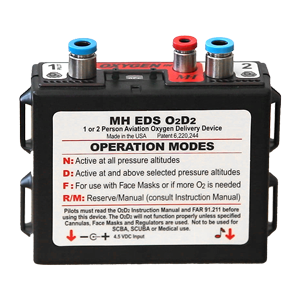
O2D2-2G- 2015 / 08
- W: 4.3″
H: 3.85″
D: 1.25″
W: 4.3 in. (10.9 cm.)
H: 3.85 in. (9.8 cm.) with connectors
D: 1.25 in. (3.2 cm.) - 12.1 oz (.343 kg)
- Integrated
- Digital
- N, D5, D10, F5, F10, F15, F20
- Rotary
- AA
- 100 hrs (1 user)
50 hrs (2 users)
Using Duracell® Ultra or Energizer® Max alkaline batteries at 77°F (25°C) under normal operating conditions. - Yes
- Yes O2D2-2G units with a serial number OD2-06349 or higher automatically switch from external power to batteries should external power fail.
- Yes
- Brass
- Yes